
Guest lecture: Exploring AI Applications in (Language) Education
Jakov Proroković, PhD, University of Zadar (Croatia)
The goal of this presentation is to provide an overview of rapidly advancing large language models (such as GPT and Gemini) and their applications in language education, as well as to identify key AI-powered tools and techniques in the broader educational context. The implications of AI for both students and teachers will be discussed, along with the ethical considerations that educators face in light of these rapidly evolving technologies. This includes outlining key concepts and tools such as computer-assisted instruction, intelligent tutoring systems (ITS), automated error detection, and intelligent tutoring for specific language skills (reading, writing, pronunciation), as well as exploring primary technologies like natural language processing (NLP), automated speech recognition, and machine learning. Additionally, he will present some results from an unpublished study on the limited lexicographic potential of AI in the context of English loanwords. Finally, the lecture will conclude with an invitation for discussion on the contrasting views of AI in education: the utopian vision versus the dystopian perspective.
The open lecture takes place on the 5th of November 2024, 4 PM, at lecture hall 2, altes Audimax (Rubenowstraße 1).

Workshop: (Inter-/Pluri)cultural communication and culturally reflective learning at school and university
Prof. Dr Sylwia Adamczak-Krysztofowicz, Adam Mickiewicz University, Poznań (Poland)
Culturally reflective learning is not just a subject specific to the teaching profession. It's not just pupils who learn, but also students. Student teachers in particular should be made aware of issues relating to (inter/pluri)cultural communication.
Part 1
In the first part of the workshop, students will first familiarise themselves with the theoretical foundations of different cultural concepts, interculturality and communication. In a next step, terms such as intercultural competence, self-image, image of others and meta-image, prejudices and stereotypes are discussed in more detail. The introductory theoretical part with interactive tasks for the participants is intended to form a basis for the joint acquisition of intercultural competence and for the critical and reflective analysis of ethnomemes in the second part of the workshop.
Part 2
In the second part of the interactive workshop, the question of how ethnomemes can be used as valuable media for culturally reflective learning both in advanced foreign language teaching and in multicultural collaborations will be addressed. In order to demonstrate the importance of ethnomemes in the treatment of ethnostereotypes, an overview of the different criteria for analysing ethnomemes is given after an introduction to the term (ethno)memes with a focus on their didactic-methodological potential and illustrated with selected examples. The first hybrid trilateral project seminar is then presented, which took place within the framework of the study trip between the universities in Marburg, Nijmegen and Poznań funded by the German Academic Exchange Service. Finally, the presented didactic-methodological model for the integration of ethnomemes into university project work will be discussed and tested with students from Greifswald.
When: 11.07.2024
Part 1: 10:15-12:00 & Part 2: 13:30-15:30
Wollweberstraße 1, Room 0.27

Exploring Heterogeneity in International Contexts
In recent times, both school and higher educational research has broadly focused on different social dimensions of heterogeneity and their impact on individuals, schools, and society. This speaker series works from the premise that heterogeneity in an educational context promotes a more diverse, equitable and inclusive society and hence, should be encouraged and celebrated. This series will explore the study of heterogeneity from a variety of theoretical and methodological approaches and will highlight different international educational institutions' appreciation and commitment to creating vibrant and diverse global communities in which students can thrive.
January 30, 2023,5-6pm (CET) - Dr. Kristan Morrison (Greifswald/Radford)
February 20, 2023,5-6pm (CET) - Dr Eric Common and Dr Kelly Carrero (Flint/Texas)
April 24, 2023,5-6pm (CET) - Stefan Fusenich (Lincoln)
May 15, 2023, 5-6pm (CET) - Dr Christine Kenney and Dr Melissa Sreckovic (Flint)
May 31, 2023, 5-6pm (CET) (NEW DATE) - Dr Adam Hounslow-Eyre (Lincoln) Join the session
Speaker Series Part 1 - 30.01.2023
Innovative alternative schools: Fear and attraction for heterogeneity in school types - Dr. Kristan Morrison
Dr Morrison explores with the attendees the question of whether or not societies (German and American) accept a broad array of innovative alternative schools as legitimate forms of education. She particularly focuses on democratic free schools, which are founded on a philosophical approach in which the students, teachers, administrators, and other participants have equal rights and power of decision-making about almost all issues of school governance and personal educational matters.She provides some examples of how she teaches about these schools and explores her students' (pre-service and in-service teachers) reactions to them - both their attractions to and fears of them. She ends by posing the question of whether we can get to a point of valuing the heterogeneity of school types in the same way we have come to value heterogeneity about human differences within a school.

Dr Morrison is a professor in the School of Teacher Education and Leadership at Radford University in Radford, VA, US. She received her PhD in the Foundations of Education from the University of North Carolina at Greensboro, a Master of Arts in History and a Master of Arts in Education both from Wake Forest University, and a Bachelor of Arts in History and Sociology from Westminster College (Pennsylvania). She is currently serving as a Visiting Professor at the University of Greifswald in Germany where she is teaching about educational alternatives and doing field work with Greifswald students at a democratic free school in Mecklenburg-Vorpommern, Germany. She has studied such schools and self-directed homeschooling ("unschooling") in the US and internationally and is always intrigued by pre-service teachers' reactions to the theory and reality of these forms of education.
Speaker Series Part 2 - 20.02.2023
Culturally relevant and socially important school-based interventions across academic, behaviour, and social-emotional domains - Dr. Eric Common and Dr. Kelly Carrero
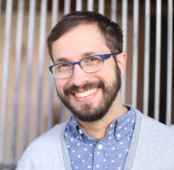
Eric Alan Common, Ph.D., BCBA-D, LBA, MI is an Assistant Professor in the Education Department at the University of Michigan - Flint. Dr. Common's background is in special education and applied behaviour analysis. He is interested in the active role 'schooling' plays in child development and the complex phenomena of learning-across academic, behaviour, and social-emotional domains. His research examines whole-child initiatives delivered in schools using Comprehensive, Integrated, Three-Tiered (Ci3T) model of prevention and culturally and socially valid applied behaviour analytic services.
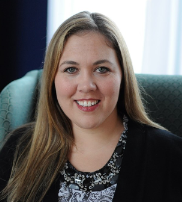
Kelly M. Carrero, Ph.D., BCBA, LBA-TX is an Associate Professor with tenure in the Psychology & Special Education Department at Texas A&M University-Commerce. She has served culturally and linguistically diverse children and youth with exceptionalities and behavioural concerns in a variety of settings. Her research projects serve as a vehicle for positive social change and advocacy for children identified with exceptionalities and challenging behaviours (including Autism Spectrum Disorders). Specifically, she is interested in identifying and examining culturally responsive and socially valid practices in research practices and service delivery. Dr. Carrero serves her profession as a reviewer for several journals and an active member of the Council for Exceptional Children (CEC) and its respective divisions.
Speaker Series Part 3 - 24.04.2023
Using group work in the heterogeneous classroom to support progress - Stefan Fusenich
Stefan Fusenich's presentation examines the use of group work to manage the heterogeneous classroom. Within this session he will discuss how diverse students (for example, students that have learning disabilities and students who are gifted) can be included and not just integrated into the classroom though effective planning and scaffolding of group work, considering Marzano, Pickering and Pollock's research on effective learning in groups and more recent work by Werth on 'grouped to achieve'.
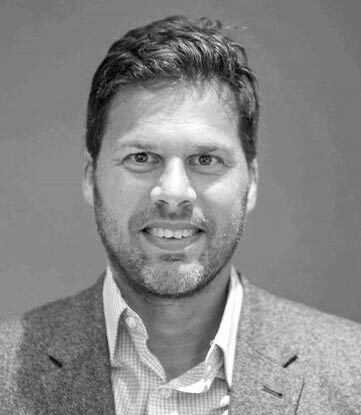
Stefan Fusenich is a teacher educator and DfE subject learning coach (advanced practitioner). Stefan has extensive management and teaching experience across various posts in education and is a qualified lecturer with Qualified Teacher Learning and Skills status. He previously worked with the Learning and Skills Improvement Service as a critical friend, and on capacity building projects with schools, training providers and colleges in the UK and abroad.
Stefan has experience of teaching and management across a range of vocational and academic courses and has held senior posts as a head of department, student support manager, advanced teaching and learning coach, programme leader and observation team leader. He has particular expertise in post 16 curriculum development, responsive teaching, assessment, progress and value added.
Speaker Series Part 4 - 15.05.2023
Celebrating, supporting, and promoting heterogeneity through community-based events - Dr Christine Kenney & Dr Melissa Sreckovic
Dr Christine Kenney is an associate professor of Education in the School of Education and Human Services at the University of Michigan-Flint. She is also currently serving as the Chair of the Education Department. She received her PhD from the University of Michigan-Ann Arbor in the area of literacy, language and culture. She earned a Master's of Arts in Early Childhood Education and Bachelor of Arts in Special Education from Eastern Michigan University. Her current scholarship involves the examination of effective inclusive practices through community partnerships.
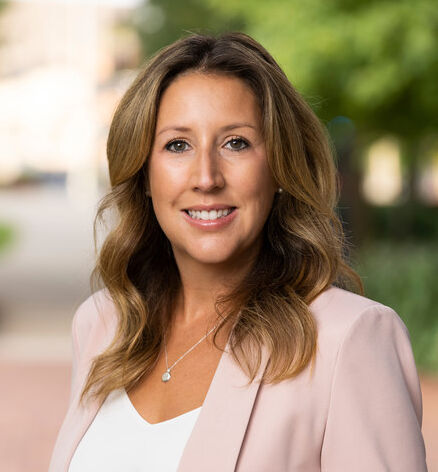
Dr. Melissa Sreckovic is an associate professor of Education and is currently serving as the Honors Program Director at the University of Michigan-Flint. She received her PhD in Special Education from the University of North Carolina at Chapel Hill, her Master's of Arts in Special Education and Literacy and her Bachelor of Arts in Elementary Education from Michigan State University. Her current scholarship is focused on identifying and examining the efficacy of practices to promote the authentic inclusion of autistic individuals in schools and communities.
Speaker Series Part 5 - 31.05.2023 (Kopie 1)
A 'What Works' Curriculum: Core knowledge and diverse learners in the English education system - Dr Adam Hounslow-Eyre
Dr Adam Hounslow-Eyre's presentation examines the impact of the thought of E. D. Hirsch and the concept of core knowledge in the most recent revision on the English National Curriculum. These developments are contextualised and critiqued by a consideration of the development of 'what works' and evidenced based practice in English schools that is perhaps 'insensitive' to the heterogeneity of learners.
Adam Hounslow-Eyre PhD, PGCE, fHEA, FCCT is Deputy Head of Programmes for Education, Health and Lifelong Learning and Programme Leader for Education Studies at Bishop Grosseteste University in Lincoln, England (UK). Adam was a Primary School (ages 5 -11) Teacher and Headteacher for approximately 20 years, increasingly specialising in working in small rural or semi-rural schools with mixed age classes. He qualified as a Critical Skills Programme trainer, delivering training nationally across the United Kingdom and adopted the active learning and humanistic approach in his own teaching. Adam was a regional coordinator for the Cambridge Primary Review Trust's research into Primary Education (the biggest such national research report since the Plowden Report). Adam also contributed to the English Government's consultation on developing the Primary National Curriculum in Computing. His research background and interests are in the philosophy of education; particularly the call for 'what works' education research and pedagogy, process philosophy and embodied cognition. He also researches on the impact of digital technology and computing in schools.
In the 2021/2022 academic year, the Department of Educational Science offered two international lectures.
Teacher training worldwide
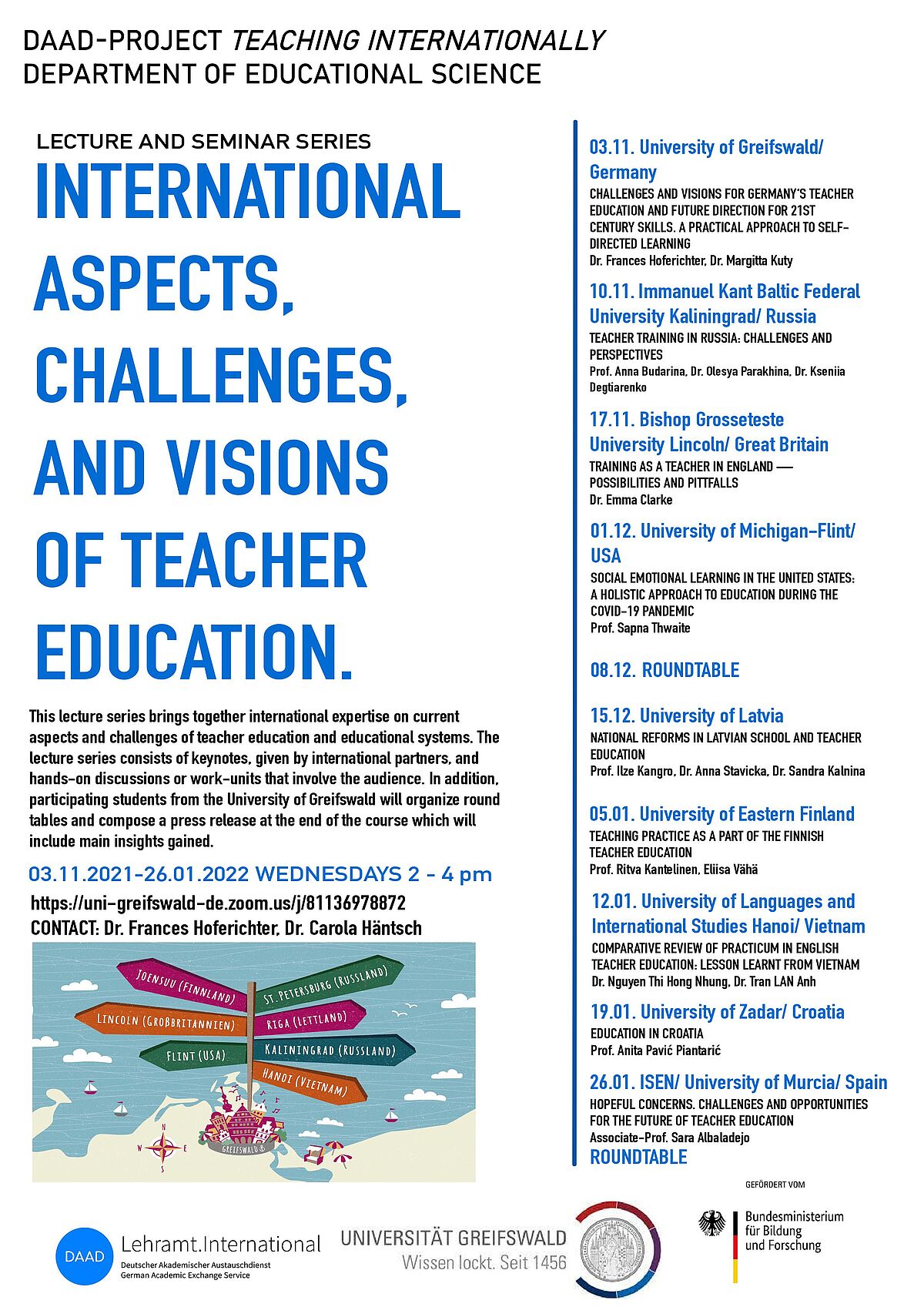
By looking at current issues and challenges of education systems worldwide, the seminar "International aspects, challenges and visions of teacher education" aims to develop common visions for the further development of the education system at national and international level. Lecturers from international partner universities will kick off the discussion with a keynote speech and present best practice examples from their respective countries. This will be followed by a discussion on how promising structures and methods for an innovative school environment can be adopted in all countries.
International Aspects, Challenges, and Visions of Teacher Education
This seminar brings together international expertise on current aspects and challenges of educational systems in e.g., Finland, Russia, U.S.A., Great Britain. Various international partner Universities will share their insights and develop common visions to improve the educational system on both the national and global level. We will discuss the questions of "What skills do students need in the21st century and what does it take to support our students on their way to become responsible, creative, and courageous global players?" We will learn about "best practice" scenarios around the world and discuss how we can adopt promising structures, methods, and settings to innovative school settings.
The seminar consists of keynotes, given by international partners, and hands-on discussions or work-units that involve all participants of the seminar. In addition, participating students from the University of Greifswald will organize round tables and compose a press release at the end of the course which will include main insights gained as well as formulate demands to the Ministry of Education.
When: Wednesdays (November 3rd 2021 - January 26th 2022); 2:15 - 3:45 pm (Central European Time)
Where? The online talks will be broadcasted using Zoom.
uni-greifswald-de.zoom.us/j/81136978872
Meeting-ID: 811 3697 8872
Contact:Dr Frances Hoferichter
Inclusion worldwide
In the seminar "All In! International school systems and their way to inclusion", participants will take a look at the topic of inclusion in Germany and around the world. Educational systems in different countries will be analysed and compared from the perspective of inclusion in order to identify parallels and differences, from which possible shared potentials and challenges can then be derived. Educational scientists from all over the world (Great Britain, Vietnam, Latvia, USA, India, Greece, Nigeria) will enrich the seminar with their input and thus offer an international view of the current status and global challenges in the field of inclusion.
All in?! International School systems and their way to Inclusion
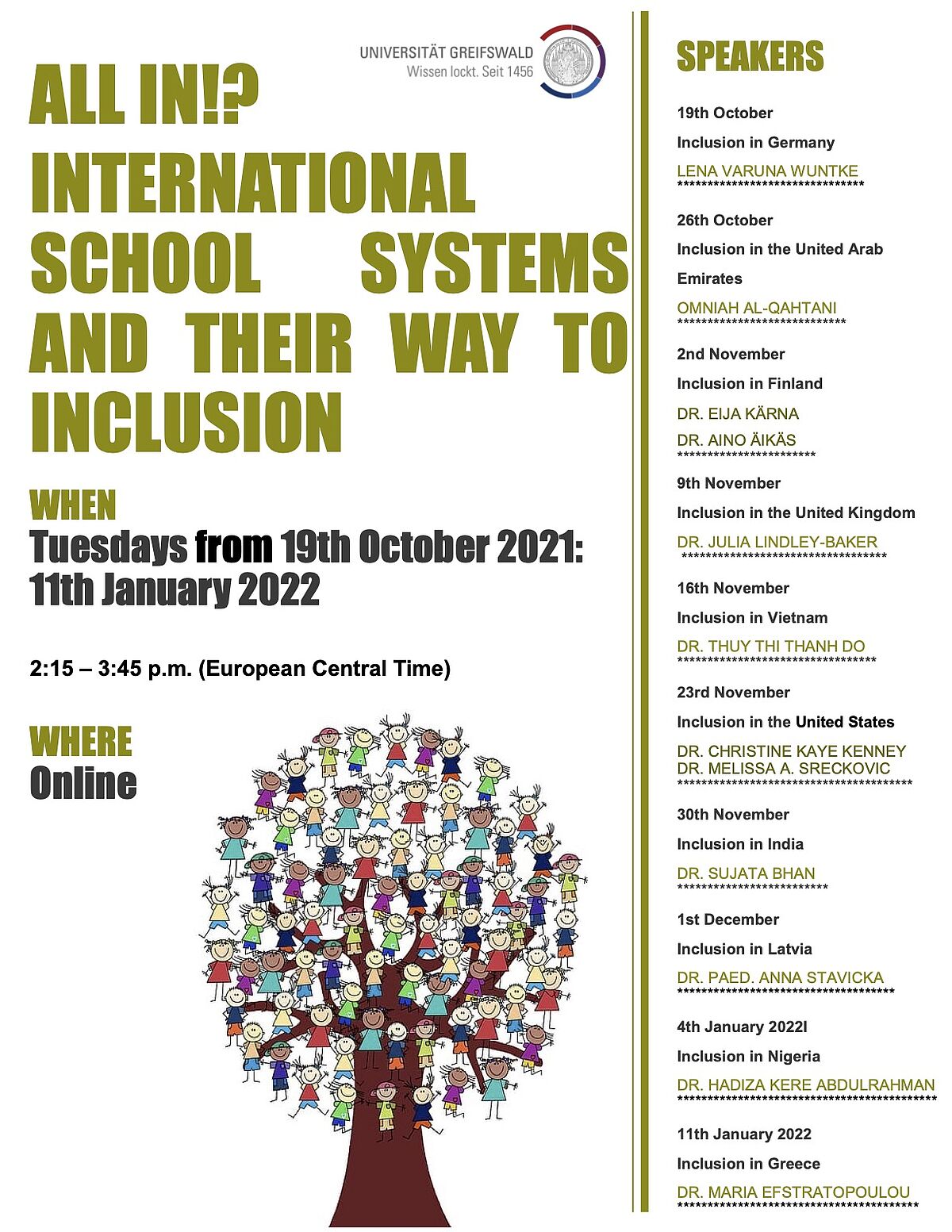
Inclusive education opens up fair opportunities for educational justice for all children and young people - regardless of social and ethnic background, gender, special needs or other factors. At the same time, inclusion is considered one of the biggest challenges in the German school system. How about other countries?
In the lectures series "All in! International school systems and their way to inclusion", school education systems in different countries around the world will be presented on the aspect of inclusion in the fields of special educational needs. Among other things, the concept(s) and understanding of inclusion, the historical development, legal foundations, framework guidelines and the implementation of inclusion in the various school systems will be addressed.
What parallels and differences can be identified?
And what (common) opportunities and challenges will the international school landscape face in the coming years?
When? Tuesdays from 19th October 2021 - 11th January 2022; 2:15 - 3:45 p.m. (European Central Time)
Where? The online talks will be broadcasted using Zoom.
Contact:Lena Varuna Wuntke
In the 2021/2022 academic year, two workshops were offered at the UG for students and teaching staff within the framework of the project.
Intercultural teaching
This workshop offers an introduction to intercultural teaching and learning styles. The role of cultural values for teachers and students will be analysed in depth. In addition to a critical look at the concept of culture, cultural influences on perceptions and expectations as well as different communication styles will be analysed.
When: 06.12.2021, online
Strengthening of intercultural competences
Intercultural learning is now a cross-cutting task in almost every curriculum, making the development and promotion of intercultural competences in students an increasingly important task for teachers. However, in order to promote intercultural learning among students, teachers need to become aware of their own (inter)cultural identity and reflect on and strengthen their own intercultural competences.
The workshop offers student teachers the opportunity to get to know different models of intercultural competence, which can later be used in the classroom. The workshop also offers space to try out intercultural exercises and games together and to reflect on where and how they can be used in everyday school life.
When: 30.11.2021, online
Working in international teams
This workshop takes an in-depth look at the role cultural values play in cooperation within intercultural teams and how good cooperation can be actively promoted. Participants will learn to understand and positively shape team processes and develop strategies to strengthen cooperation in intercultural teams.
When: 03.11.2021, online
Intercultural sensitisation & dealing with diversity

The workshop focuses on a sound understanding of the potential and challenges of dealing with diversity and interculturality in teaching as well as raising awareness of diversity and interculturality in the context of working with heterogeneous groups of students. In addition, participants will work together to develop best practices for culturally sensitive and diversity-orientated teaching.
When: 01.11.2021, online